
Retatrutide Tri-Agonist (GIP, GLP-1 and Glucagon) Overview
Retatrutide, an investigational drug developed by Eli Lilly and Company, represents a novel approach in the treatment of obesity and potentially type 2 diabetes mellitus. This drug has garnered attention due to its unique mechanism of action and promising results in clinical trials. In this discussion, we will delve into what Retatrutide is, its mechanism of action, clinical trial results, potential implications for obesity and diabetes treatment, and the future outlook for this drug.
Retatrutide Structure
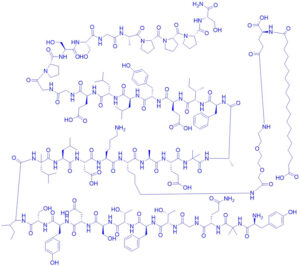
- Sequence: H-Tyr-(Aib)-Gln-Gly-Thr-Phe-Thr-Ser-Asp-Tyr-Ser-Ile-(α-Me-Leu)-Leu-Asp-Lys-(diacid-C20-gamma-Glu-(AEEA)-Lys)-Ala-Gln-(Aib)-Ala-Phe-Ile-Glu-Tyr-Leu-Leu-Glu-Gly-Gly-Pro-Ser-Ser-Gly-Ala-Pro-Pro-Pro-Ser-NH2
- Molecular Formula: C221H342N46O68
- Molecular Weight: 4731.33 g/mol
- PubChem CID: 24815904
- CAS Number: 2381089-83-2
Understanding Retatrutide
Retatrutide is a synthetic peptide that acts as a triple agonist, meaning it stimulates three different hormonal receptors: gastric inhibitory polypeptide (GIP), glucagon-like peptide-1 (GLP-1), and the glucagon receptor. These receptors are involved in the regulation of glucose metabolism and appetite control.
Mechanism of Action
The drug’s mechanism of action is complex and multifaceted, targeting various aspects of metabolism and appetite:
- GIP Receptor Agonism: GIP is an incretin hormone that stimulates insulin secretion post-meal, playing a role in glucose homeostasis.
- GLP-1 Receptor Agonism: GLP-1, another incretin hormone, enhances insulin secretion and inhibits glucagon release, thereby contributing to reduced blood glucose levels. GLP-1 also slows gastric emptying and promotes a feeling of satiety.
- Glucagon Receptor Agonism: While glucagon typically raises blood glucose levels by promoting hepatic glucose production, its action in the context of Retatrutide is more nuanced and contributes to weight loss through mechanisms that are still being studied.
Clinical Trials and Results
Retatrutide has undergone various clinical trials, with Phase 2 trials showing particularly promising results:
- A significant finding from these trials was the up to 17.5% mean weight reduction in adults with obesity and overweight at 24 weeks, extending to 24.2% at 48 weeks.
- These results highlight the potential of Retatrutide as a more effective treatment for obesity compared to existing medications.
Potential Implications for Obesity and Diabetes Treatment
Obesity is a global health issue, often associated with various comorbidities, including type 2 diabetes, cardiovascular diseases, and certain types of cancer. The development of Retatrutide marks a significant advancement in obesity treatment:
- Effectiveness in Weight Loss: The percentage of weight loss observed in the trials suggests that Retatrutide could be a more effective option than current weight loss drugs.
- Impact on Diabetes: Given the drug’s effect on insulin and glucagon, it has the potential to be beneficial in the treatment of type 2 diabetes, a common comorbidity of obesity.
Safety and Side Effects
Like all medications, Retatrutide’s safety profile and side effects are critical aspects of its development. While detailed data on side effects are not fully disclosed yet, common issues with GLP-1 receptor agonists include gastrointestinal symptoms like nausea and vomiting. The long-term safety of Retatrutide will be a crucial factor in its FDA approval process.
Future Outlook and FDA Approval Status
As of the last update, Retatrutide had not received FDA approval. The journey towards approval includes further clinical trials to establish its safety, efficacy, and potential long-term effects. The drug’s future in the market will largely depend on these results, alongside considerations of cost, accessibility, and comparison with existing treatment options.
Conclusion
Retatrutide emerges as a promising candidate in the fight against obesity and its associated comorbidities, particularly type 2 diabetes. Its unique mechanism of action and significant results in weight reduction highlight its potential as a breakthrough in obesity treatment. However, further research and clinical trials are essential to fully understand its efficacy, safety, and place in therapy. The ongoing development of Retatrutide will be closely watched by the medical community and those affected by obesity and diabetes.
For more detailed and up-to-date information, it is advisable to consult medical professionals and refer to resources such as Drugs.com, Eli Lilly press releases, and medical journals like The New England Journal of Medicine.