
GHK-Cu is a small peptide that was first discovered in the early 1970s by Dr. Loren Pickart, a biochemist who was studying the molecular structure of human plasma. Dr. Pickart discovered that GHK-Cu was a naturally occurring peptide that was present in human plasma, and he began to study its potential role in the body.
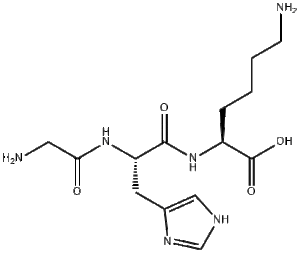 Over the next several decades, Dr. Pickart and other researchers conducted a series of studies that showed that GHK-Cu was involved in a number of physiological processes, including skin wound healing, collagen production, and tissue repair. They also found that the peptide had potent anti-inflammatory and antioxidant properties, making it a promising candidate for the treatment of a range of skin conditions, including aging, sun damage, and scarring.
In the early 2000s, GHK-Cu began to gain recognition in the beauty and cosmetic industries, as people began to recognize its potential as a treatment for aging skin and other skin conditions. In response, a number of cosmetic and skincare companies began to develop and market products that contained GHK-Cu, and the peptide quickly gained a reputation as a powerful anti-aging ingredient.
Despite its growing popularity, the history of GHK-Cu has not been without controversy. While some scientists and skincare experts have hailed the peptide as a breakthrough in the fight against aging and skin damage, others have expressed skepticism about its efficacy and safety. Some critics have pointed to the lack of long-term clinical trials and the limited data available on the safety and efficacy of the peptide, arguing that more research is needed before it can be considered a viable treatment for skin conditions.
Despite these criticisms, the use of GHK-Cu as a skincare ingredient continues to grow, and many people are turning to products that contain the peptide to improve the appearance and health of their skin. In recent years, there has been a growing interest in the use of GHK-Cu as a potential treatment for a range of skin conditions, including aging, sun damage, and scarring, and many skincare companies are investing in research to better understand the mechanisms of action and potential health benefits of the peptide.
In conclusion, the history of GHK-Cu is a testament to the ongoing pursuit of new treatments for skin conditions and aging. Despite the challenges and controversies that have arisen over the years, GHK-Cu remains one of the most promising and highly studied peptides in the skincare industry, and its potential to improve the health and appearance of the skin continues to be a subject of intense research and interest. Whether GHK-Cu will prove to be a safe and effective treatment for skin conditions remains to be seen, but the ongoing research and interest in the peptide suggest that its potential is significant, and that it may play a key role in the future of skincare.